
Apple rejected touchscreen Macs for years. What changed its mind?
According to Fast Company, Apple has added a touchscreen to the MacBook Pro for the first time after years of criticism of the idea. The reasons include changing user expectations and the ability to preserve the laptop’s familiar thickness and weight.
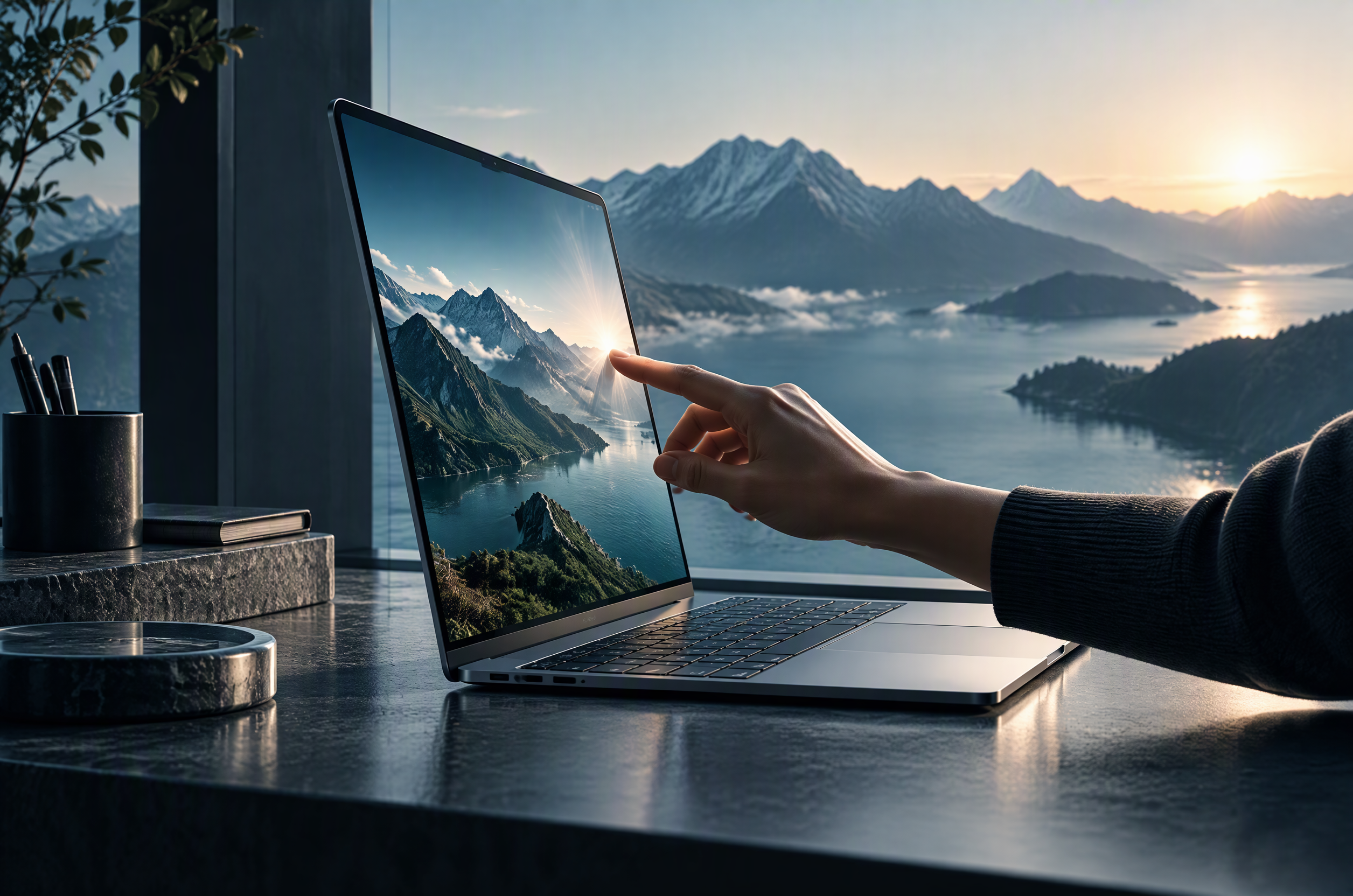
According to Fast Company, Apple has added a touchscreen to a Mac for the first time in the new MacBook Pro with a PROLED XDR display. For years, the company explained its decision to avoid touchscreens in terms of ergonomics: during extended use, people have to raise their arms to reach the display, which quickly becomes tiring.
In 2010, Steve Jobs called a touchscreen laptop inconvenient, and in 2018 Craig Federighi said he did not expect Apple to reconsider that position. In 2021, Apple again emphasized the separation between its products: the iPad is optimized for direct touch, while the Mac is designed for a keyboard, trackpad, and mouse.
What changed? Fast Company points to several factors. Users have grown accustomed to touch controls on the iPhone and iPad, and a new generation of creators expects the same from the MacBook. Apple also believes it no longer has to sacrifice the laptop’s thickness and weight to add a touch layer. The publication attributes this explanation to Greg Joswiak, Apple’s senior vice president of Worldwide Marketing.
Apple has not completely redesigned macOS for finger input. The new MacBook Pro retains the traditional laptop design, keyboard, and trackpad. The touchscreen supplements familiar controls: users can scroll through pages, zoom in on photos, drag objects, and quickly rearrange windows. Many existing apps should respond to touches as they would to clicks, while updated system APIs let developers add gestures such as zooming, rotating, and multitouch.
The practical value depends on the use case. Direct touch may be convenient for reading, signing documents, working with graphics, 3D models, and musical instruments. For extended office work, the keyboard and trackpad remain the primary tools: adding a touchscreen does not remove the ergonomic limitations that existed before.
At launch, the feature is slated for the MacBook Pro with a PROLED XDR display. Apple has also introduced 14- and 16-inch models, with preorders starting October 28, 2026, and sales expected to begin November 6.
Learn more
Original publications for a closer look.
Why Apple finally added a touchscreen to the Mac — Fast Companywww.fastcompany.comApple unveils MacBook Pro with PROLED XDR displaywww.apple.com